Mold Mitigation vs. Remediation
Mold growth in homes and businesses is a common problem that can lead to significant health risks and structural damage if not properly addressed. When it comes to dealing with mold, the terms “mitigation” and “remediation” are often used interchangeably. However, they represent two distinct processes with different goals and methods. Understanding the difference between mold mitigation and mold remediation professional solutions for handling mold issues is crucial in determining a great approach to safeguard your property and health. In this blog post, we will explore the key differences, the processes involved in each, and how to decide which solution is right for your situation.
What is Mold Mitigation?
Mold mitigation refers to the process of preventing mold growth and minimizing the conditions that allow mold to thrive. The primary goal of mitigation is to control and manage moisture levels to prevent mold from developing in the first place. This process does not involve removing existing mold but focuses on stopping mold from spreading or forming.
Key Components of Mold Mitigation:
- Moisture Control: Mold needs moisture to grow. Mitigation involves identifying and addressing sources of moisture, such as leaky pipes, roof leaks, or high humidity levels. Repairing these issues is essential to stop mold growth.
- Humidity Management: Keeping indoor humidity levels below 50% is vital. Dehumidifiers, air conditioners, and proper ventilation systems are used to maintain optimal humidity levels.
- Waterproofing: Waterproofing basements, crawl spaces, and other areas prone to dampness can prevent water intrusion and mold formation.
- Ventilation Improvement: Ensuring that bathrooms, kitchens, and laundry rooms have adequate ventilation reduces the buildup of moisture and prevents mold growth.
- Preventative Maintenance: Regular inspections and maintenance of HVAC systems, plumbing, and roofing help detect and fix issues before they lead to mold growth.
Mitigation is ideal for preventing mold before it becomes a problem. However, if mold is already present, remediation is necessary.
What is Mold Remediation?
Mold remediation involves the identification, removal, and treatment of mold growth in affected areas. The goal of remediation is to reduce existing mold colonies and address the underlying causes of mold to prevent its return.
Key Components of Mold Remediation:
- Inspection and Assessment: A thorough inspection identifies the extent of mold growth and the type of mold present. Professionals use moisture meters, thermal imaging, and air quality tests to assess the situation.
- Containment: To prevent mold spores from spreading to other areas, containment methods such as physical barriers and negative air pressure are used during the remediation process.
- Mold Removal: Depending on the extent of the infestation, removal methods may include cleaning with antimicrobial agents, removing contaminated materials like drywall or insulation, and using HEPA vacuums to reduce spores.
- Air Filtration: HEPA air scrubbers and vacuums are used to capture airborne mold spores and improve indoor air quality during and after remediation.
- Cleaning and Disinfection: All affected surfaces are thoroughly cleaned and disinfected to reduce remaining mold spores.
- Repair and Restoration: After mold removal, any damaged structures or materials are repaired or replaced to restore the space to its original condition.
Remediation is necessary when mold growth is already present, particularly if the infestation is significant or poses health risks.
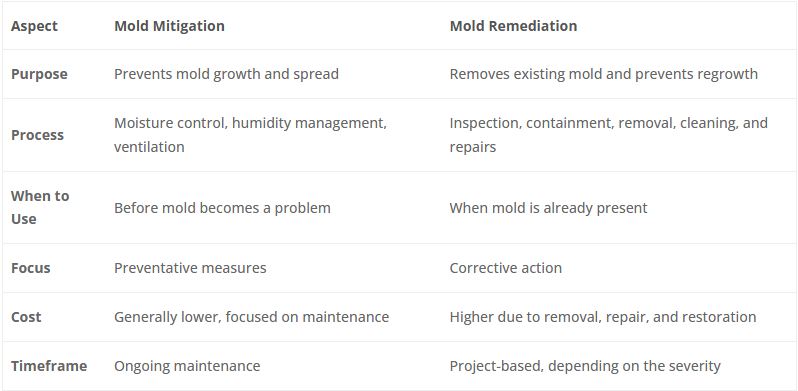
Mold Mitigation vs. Remediation: Key Differences
Understanding the core differences between mold mitigation and remediation can help you choose the right solution for your needs.
Which Solution is Right for You?
Choosing between mold mitigation and remediation depends on your current situation. Here’s how to determine a great course of action:
When to Choose Mold Mitigation:
- You want to prevent mold growth in your home or business.
- You live in a humid climate prone to mold issues.
- You have experienced water damage but no visible mold growth.
- You are buying or selling a property and want to ensure it is mold-resistant.
- You have had previous mold issues and want to prevent recurrence.
When to Choose Mold Remediation:
- You see visible mold growth on walls, ceilings, or floors.
- You smell a persistent musty odor in your property.
- You or your family members experience unexplained health issues (e.g., allergies, asthma) that worsen indoors.
- There has been significant water damage, such as flooding or a burst pipe.
- Home inspection reports reveal mold presence.
Why Hire Professional Mold Companies?
Both mold mitigation and remediation require specialized knowledge and tools to be effective. While minor mold problems or preventive measures can sometimes be managed by homeowners, larger infestations and complex mitigation strategies are best handled by professionals.
Benefits of Hiring Professionals:
- Accurate Assessment: Professionals can accurately assess the extent of mold growth and identify hidden mold that may not be visible.
- Effective Containment: Proper containment prevents mold spores from spreading during the removal process.
- Dependable Removal: Experts use industry-approved methods and protective equipment to remove mold safely.
- Long-Term Solutions: Professional services not only remove mold but also address the root cause to prevent it from returning.
- Compliance with Regulations: Professionals follow industry standards and local regulations to ensure thorough and effective mold handling.
Preventing Future Mold Growth
Whether you undergo mitigation or remediation, preventing future mold problems is essential. Here are proactive steps to keep mold at bay:
- Repair leaks in roofs, windows, and pipes promptly.
- Keep indoor humidity below 50% using dehumidifiers and air conditioners.
- Ensure proper ventilation in moisture-prone areas like bathrooms and kitchens.
- Clean and repair gutters to prevent water buildup near the foundation.
- Regularly inspect areas prone to moisture, such as basements and crawl spaces.
- Use mold-resistant building materials in renovation projects.
Final Thoughts: Attack Your Mold Problem Today!
Mold mitigation and remediation are two critical processes for protecting your home and health from the dangers of mold. Mitigation focuses on preventing mold growth through moisture control and maintenance, while remediation involves the removal and treatment of existing mold problems. Understanding the difference between these processes empowers you to make informed decisions when facing mold-related challenges.
If you suspect mold growth in your home or want to safeguard your property from future infestations, consulting with mold professionals is a great step forward. They can provide expert guidance, comprehensive solutions, and peace of mind, ensuring your living or working environment remains clean and well-maintained.